
Treatment-resistant depression means your depression has not improved enough after trying at least two antidepressants, each taken at a proper dose for long enough to work. It is common, it is not your fault, and it does not mean nothing will help. It means the next step should be different from the last one: a careful review of what has been tried, then options that work in a different way, such as TMS therapy at our Folsom and Rocklin offices, Spravato, or a more deliberate approach to medication.
This article explains what the term means, how a psychiatrist decides whether it applies to you, and what the ladder of options looks like in the Sacramento area.
If you are in crisis or thinking about harming yourself, do not wait for an appointment. Call or text 988 (Suicide and Crisis Lifeline) or call 911.
What is treatment-resistant depression?
The National Institute of Mental Health describes treatment-resistant depression as depression that does not get better after trying at least two antidepressants. That "at least two" standard, counted within the current episode of depression, is also the threshold used in the studies behind Spravato's FDA approval. Insurance eligibility is a separate question: each plan sets its own criteria for TMS and Spravato, and some also require documented psychotherapy or other steps.
Two details matter. First, the trials have to be adequate. According to NIMH, antidepressants usually take four to eight weeks to work, so a medication stopped after ten days because of nausea is not a failed trial in the same way. Second, "did not get better" means the symptoms are still there, not that the medication did nothing. Many people feel somewhat better on an antidepressant and still cannot work, sleep, or enjoy anything. That partial response counts.
There is no blood test for treatment-resistant depression. It is a judgment a psychiatrist makes from your history.
How does a psychiatrist decide whether my depression is treatment-resistant?
At Sacramento NeuroPsych Associates, this happens during a psychiatric evaluation. The clinician will want to know:
- Which medications you have taken, at what dose, for how long, and why each was stopped. Bring a list, or ask your pharmacy for a printout.
- What "better" and "not better" looked like. A rating scale such as the PHQ-9 gives a number to compare against later.
- Whether something else is going on. Thyroid problems, sleep apnea, alcohol or substance use, bipolar disorder, and ongoing stress can all make depression look resistant when the real issue has not been addressed.
- Whether you have had psychotherapy, and what kind.
Sometimes this review finds the medications were never given a fair chance, and the right next step is a proper trial. Other times it confirms it is time to move up the ladder. Either answer is useful.
What are the treatment options for treatment-resistant depression?
Think of the options as rungs on a ladder. You do not have to start at the bottom, and many people use more than one.
Medication optimization and augmentation
The first rung is usually a closer look at medication: raising a dose that was never pushed high enough, switching to a different class, or adding a second medication to the first. NIMH describes that last approach, combining an antidepressant with a different type of medication, as an option specifically for treatment-resistant depression. Our medication management service handles this in person in Folsom or Rocklin, or by telehealth anywhere in California. Initial evaluations run 30 to 60 minutes, and follow-up visits track your response and adjust the plan.
Psychotherapy
Talk therapy is part of the standard of care for depression, not a consolation prize. Cognitive behavioral therapy and interpersonal therapy have the strongest evidence, and some insurance policies require documented psychotherapy before they authorize TMS. Our clinicians can coordinate with a therapist you already see.
TMS (transcranial magnetic stimulation)
TMS uses a magnetic coil placed against the scalp to stimulate the part of the brain involved in mood. The FDA cleared the first TMS device for depression in 2008, and NIMH lists it as one of the two most used brain stimulation therapies when other treatments have not worked. A typical course, per NIMH, is daily sessions five days a week for four to six weeks.
At our offices, sessions take about 20 to 30 minutes, there is no anesthesia or sedation, and most people drive themselves and go back to work afterward. We use MagVenture equipment, and Dr. Harjot Sekhon and Dr. Abhijit Ramanujam are certified in TMS. For the research, read our summary of TMS success rates and outcomes; for how the weeks are laid out, see the week-by-week TMS treatment timeline.
Spravato (esketamine nasal spray)
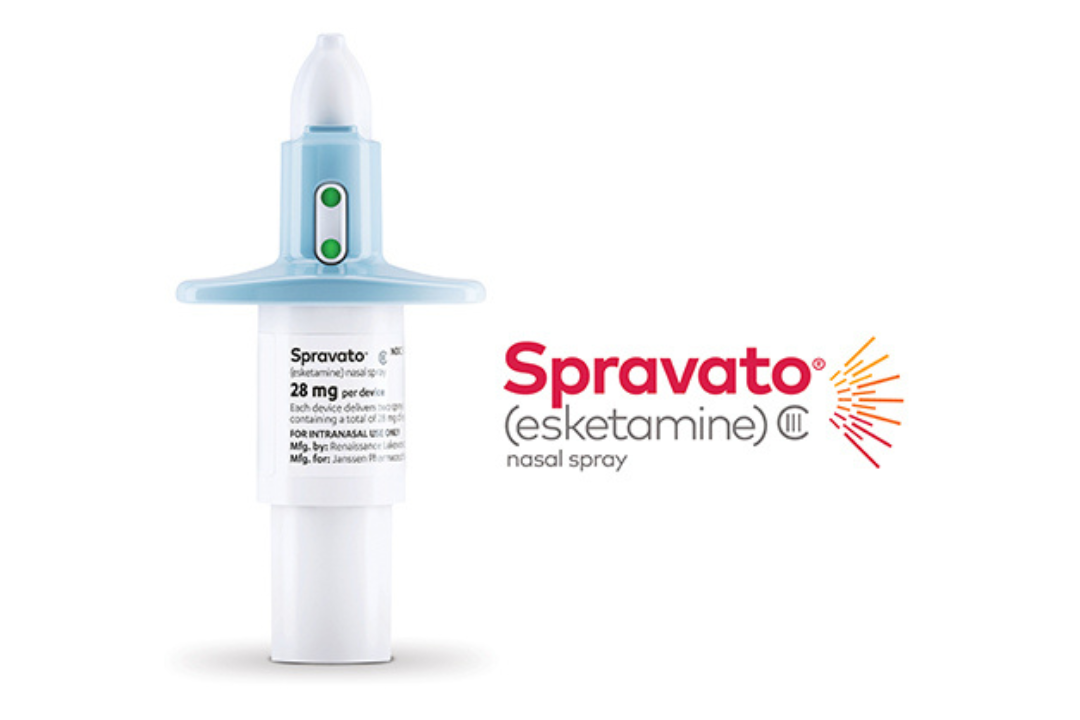
Spravato is a prescription nasal spray the FDA approved for adults with treatment-resistant depression. Esketamine acts on NMDA receptors involved in glutamate signaling, a different target from standard antidepressants, though exactly how it relieves depression is not fully understood. It is given only in a certified office under the Spravato REMS safety program. According to the prescribing information, you are observed for at least two hours after each dose, you cannot drive or operate machinery until the next day after a restful sleep, and the schedule starts at twice a week for the first four weeks before tapering.
Our Spravato program follows those rules: in-office administration, at least two hours of monitoring, and a ride home arranged in advance. To see whether you are likely to be a candidate, read who qualifies for Spravato in Sacramento. If you have seen ads for compounded ketamine sprays, our explainer on Spravato versus ketamine nasal spray covers the difference; SacNPA offers Spravato only.
Options we do not offer
A few other treatments exist. Electroconvulsive therapy (ECT) is usually considered for severe depression or when a rapid response is needed, and is done under anesthesia in hospital settings. Vagus nerve stimulation is FDA-approved for depression that has not eased after at least four other treatments but is rarely used. Intravenous ketamine is used by some clinics but is not FDA-approved for depression. Deep brain stimulation remains experimental. NIMH's brain stimulation page covers these in more detail. Sacramento NeuroPsych Associates does not provide any of them. If one is the right fit, your psychiatrist will say so and help you find it.
How do I choose between TMS and Spravato?
Both are offered at our offices, so the choice usually comes down to practical differences:
- Time. TMS is a short daily visit for several weeks. Spravato is a longer visit (at least two hours of monitoring) twice a week at first, then less often.
- Driving. You can drive yourself to and from TMS. After Spravato you need a ride home and cannot drive until the next day, after a restful sleep.
- Medication. TMS involves no drug. Spravato has its own risks, including sedation, dissociation, breathing problems, and increased blood pressure, which is why monitoring lasts at least two hours and continues until the clinician decides you are ready to leave.
- Medical history. Metal implants near the head or a seizure history affect TMS eligibility; uncontrolled blood pressure affects Spravato eligibility.
- Insurance. Both usually require prior authorization. Our guide to whether insurance covers TMS walks through the typical criteria.
Some patients do both over time. Your psychiatrist will recommend a starting point, and the plan can change if it does not help enough.
Treatment-resistant depression care in Folsom and Rocklin
Sacramento NeuroPsych Associates offers psychiatric evaluation, medication management, TMS, and Spravato at both our Folsom office on East Bidwell Street and our Rocklin office on Fairway Drive. Both are open Monday through Friday, 8:00 AM to 5:00 PM. Folsom serves El Dorado Hills, Orangevale, Rancho Cordova, and Fair Oaks; Rocklin serves Roseville, Lincoln, Loomis, and Granite Bay. A Natomas office is opening soon.
Medication management and follow-up visits can also be done by telehealth from anywhere in California. We accept Medicare, Medi-Cal, and many commercial plans; the full list is on our insurance page. Accepting a plan means we can bill it, not that a specific treatment is covered under your policy, so ask our office to verify your benefits before treatment is scheduled.
Frequently asked questions
Does treatment-resistant depression ever get better?
Yes, for many people. The term describes how your depression has responded to standard antidepressants so far, not a permanent state. TMS and Spravato were developed for people in this situation, and some patients improve with a medication change alone once their history is reviewed carefully.
Do I need a referral to be evaluated?
You can request an appointment directly through our scheduling page. Some plans, especially HMOs, require a referral from your primary care doctor, so check with your plan or ask our office what yours needs.
Can I keep taking my antidepressant during TMS or Spravato?
Usually, yes. TMS is often combined with ongoing medication, and Spravato is commonly used alongside an oral antidepressant. Do not stop or change any medication on your own; bring the question to your evaluation.
How long before I know whether a treatment is working?
Antidepressant changes typically take four to eight weeks to judge. Some TMS patients notice improvement within a few weeks of daily sessions, and some Spravato patients within the first few weeks; our article on how fast Spravato works covers that timeline. Your clinician will monitor your symptoms and side effects along the way, and rating scales can help track changes over time.
Next step
If you have tried two or more antidepressants and still feel stuck, the next step is a psychiatric evaluation. Bring your medication history, and we will go through what has been tried and which option on the ladder makes sense for you. Schedule an appointment at our Folsom or Rocklin office, or by telehealth.