
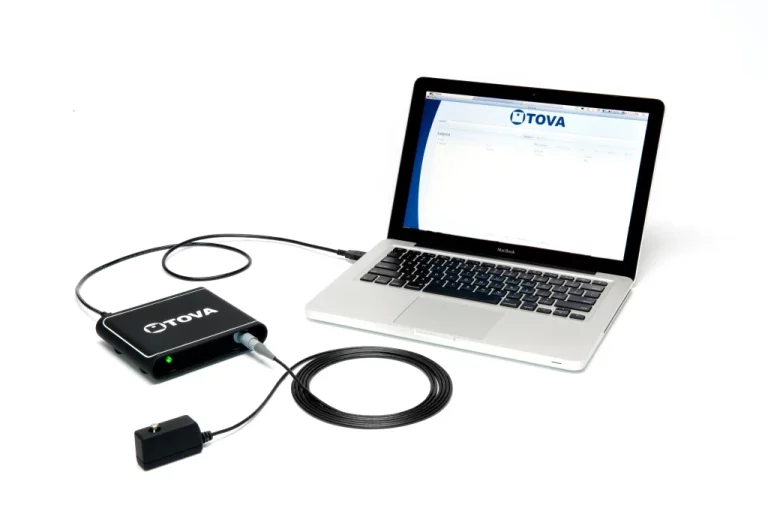
ADHD testing is not a single test. An ADHD evaluation centers on your symptoms, history, and day-to-day functioning, using a detailed clinical interview and standardized rating scales from you and the people who know you (parents, teachers, a partner). When extra attention-performance data would help, your clinician may also recommend a computerized test such as the T.O.V.A.. At Sacramento NeuroPsych Associates, evaluations for children, teens, and adults are done by psychiatric clinicians who can also treat ADHD if it's diagnosed.
This guide walks through what the process looks like, what to bring, and how to get started in the Sacramento area.
What does an ADHD evaluation involve?
Most evaluations include these steps.
- A clinical interview. Your clinician asks about current symptoms, when they started, and how they affect school, work, relationships, and daily life. They also ask about sleep, mood, anxiety, medical history, and family history, because several other conditions can look like ADHD.
- Rating scales. These are standardized questionnaires. For a child, parents and teachers usually both fill them out. Adults complete self-report scales, and a spouse or family member may be asked to give their view too.
- Additional testing, if appropriate. A computerized test such as the T.O.V.A. records response speed, consistency, missed targets, and responses to the wrong cue. Your clinician interprets these results alongside your history and the rating scales.
- A results review. Your clinician puts everything together, explains what it shows, and talks through options.
Is there one test that diagnoses ADHD?
No. There is no blood test, brain scan, or single questionnaire that confirms ADHD. According to the CDC's ADHD diagnosis guidance, a diagnosis depends on a pattern: symptoms that started before age 12, show up in more than one setting (such as home and school), have lasted at least six months, and get in the way of functioning. The number of symptoms required depends on age, and the clinician also has to rule out other conditions that could better explain them.
This is why the interview and rating scales are the core of the evaluation. Computerized testing can add useful data, but a normal result doesn't rule ADHD out and an abnormal result doesn't confirm it on its own. Our article on T.O.V.A. score ranges explains why someone can have ADHD and still score in the normal range on a given day.
ADHD testing for kids and teens
Parents often start looking for testing after a teacher raises concerns, or when homework has turned into a nightly battle. For children and teens, the evaluation leans heavily on information from both home and school, because ADHD symptoms have to show up in more than one setting.
It helps to bring:
- Recent report cards and any teacher comments about attention or behavior
- Reports from prior evaluations, plus any existing IEP or 504 plan
- A list of current medications and any past ADHD treatment
- Notes on sleep, screen time, and anything else that has changed recently
Dr. Lorerky Ramirez-Moya practices child, adolescent, and adult psychiatry and lists ADHD, autism, anxiety, and depression among the conditions she treats.
ADHD testing for adults
Many adults are evaluated for the first time in their twenties, thirties, or later. Often it happens after a child is diagnosed, or when the demands of a new job make long-standing habits like losing track of time, unfinished projects, or trouble following conversations harder to work around.
Adult evaluations ask whether symptoms were present in childhood and how they affect life now. If you can, bring old report cards or ask a parent or sibling what you were like as a kid. Your clinician will also screen for anxiety, depression, sleep problems, and substance use, which can cause attention problems or occur alongside ADHD.
What is the T.O.V.A. test?
The Test of Variables of Attention (T.O.V.A.) is an FDA-cleared, computerized test that clinicians use as an aid in assessing attention. You watch simple shapes appear on a screen and press a button only when the target shape appears. According to the test's manufacturer, the standard visual test lasts about 22 minutes, plus time for instructions. It records:
- Missed targets (omission errors), a measure related to attention
- Responses to the wrong shape (commission errors), a measure related to response inhibition
- Reaction time and how consistent it is over the course of the test
The visual task doesn't require reading. Your clinician decides whether it's appropriate for your age and situation. For a deeper look, see T.O.V.A. test: what to know and why it's useful.
Does insurance cover ADHD testing?
Coverage depends on your plan and on how the evaluation is billed. Sacramento NeuroPsych Associates works with many plans, including Aetna, Anthem Blue Cross, Blue Shield of California, Cigna Behavioral Health, Kaiser, Medicare, Medi-Cal, Sutter Select, United Healthcare, and Western Health Advantage. See the full list on our insurance page.
Accepting a plan doesn't guarantee a particular service is covered. Ask our office which services are planned for your evaluation and how they're billed. Then confirm with your insurer whether the psychiatric evaluation and any recommended T.O.V.A. testing are covered, and whether you need a referral or prior authorization.
What happens after testing?
If the evaluation points to ADHD, your clinician will talk through options. These may include behavioral strategies, school or workplace accommodations, therapy referrals, and medication. If medication is part of the plan, ongoing medication management visits track how it's working and adjust as needed. Many of those follow-up visits can happen by telehealth.
If the evaluation doesn't point to ADHD, that is useful information too. Attention problems often come from anxiety, depression, poor sleep, or other conditions that respond to different treatment.
Where can I get ADHD testing in the Sacramento area?
Sacramento NeuroPsych Associates sees patients at two offices, with a third on the way:
- Folsom: 2150 E. Bidwell St., Folsom, CA 95630
- Rocklin: 6000 Fairway Dr., Suite 14, Rocklin, CA 95677
- Natomas: 1972 Del Paso Road, Sacramento (opening soon)
When you call, ask which office and provider is the best fit for your evaluation, and where testing is available.
Frequently asked questions
How long does an ADHD evaluation take?
The T.O.V.A. itself takes about 22 minutes. The time and number of appointments for the full evaluation depend on your needs. Our office can tell you what to expect when you schedule.
At what age can a child be tested for ADHD?
ADHD can be evaluated in young children as well as teens and adults. The T.O.V.A. has a shorter version for ages 4 and 5. Ask our office whether an evaluation and that version are available and appropriate for your child.
Can I get tested for ADHD through telehealth?
Some parts of an evaluation, such as the interview or results review, may be possible by video. Ask our office which parts of your evaluation can happen by telehealth.
Do I need a referral?
Requirements depend on your insurance plan. Some HMO plans require a referral from your primary care doctor. Check with your plan, or call our office at (916) 473-2235.
Take the next step
If you or your child are struggling with focus, impulsivity, or follow-through, an evaluation can help clarify what's behind it and identify next steps. Schedule an appointment or call us at (916) 473-2235 to get started.