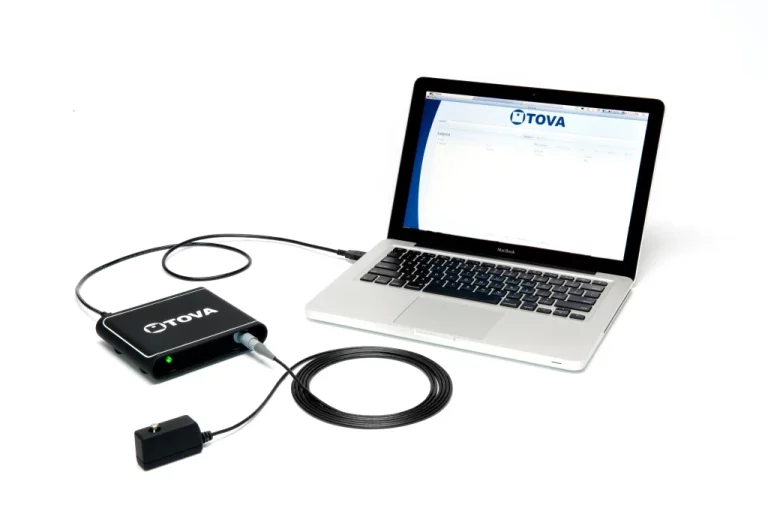

Adult ADHD testing is a clinical evaluation, not a single exam you pass or fail. A psychiatric clinician takes a detailed history, asks what your attention was like as a child, has you (and often someone who knows you well) complete rating scales, and checks for other conditions that can look like ADHD. When extra data would help, the evaluation can include a computerized attention test such as the T.O.V.A., which is part of our T.O.V.A. testing and ADHD evaluation service. At Sacramento NeuroPsych Associates, the clinicians who evaluate adults for ADHD can also treat it if that is where the evaluation leads.
This article is for adults. If you are looking into testing for a child or teen, or want the overview for all ages, start with our guide to ADHD testing in Sacramento.
Why do adults get tested for ADHD?
Most adults who ask about testing have managed for years, until something changes and the old workarounds stop working. Common triggers:
- A child was just diagnosed. Filling out the rating scales for your kid, you recognize yourself.
- A new job or promotion. More projects, more email, more meetings, fewer people keeping you on track.
- School later in life. Going back for a degree or certification and finding you can't study the way other people seem to.
- A partner or friend raised it. Missed appointments, half-finished projects, interrupting, or losing track of conversations have become a strain.
- Treatment for something else isn't landing. You have been treated for anxiety or depression and the focus problems never went away.
None of these means you have ADHD. They are good reasons to find out.
How does ADHD look different in adults?
The hyperactive, can't-sit-still picture most people have of ADHD comes from children. In adults, the pattern usually shifts. The American Psychiatric Association notes that for adults, "impulsivity and hyperactivity may decrease or appear as extreme restlessness," while inattention tends to persist.
In practice, adult symptoms tend to look like:
- Trouble starting tasks and finishing them, especially long or tedious ones
- Losing track of time, running late, missing deadlines
- Forgetting to return calls, pay bills, or keep appointments
- Trouble following a long conversation or a meeting
- Feeling restless, talking over people, making snap decisions
- A sense of working twice as hard as everyone else to get the same result
Because these problems overlap with stress, anxiety, poor sleep, and plain overload, adults are often told for years to just try harder. An evaluation helps sort out what may be going on.
How is adult ADHD diagnosed?
Clinicians use the criteria in the DSM-5-TR, the diagnostic manual used in U.S. psychiatry. According to the National Institute of Mental Health, the key requirements for adults are:
- Enough symptoms. Adults age 17 and older need five symptoms of inattention or five of hyperactivity and impulsivity. Children need six.
- Symptoms started in childhood. Several symptoms must have been present before age 12. ADHD doesn't begin in adulthood, even if it is first noticed then.
- Lasting, not situational. Symptoms have lasted at least six months and show up in more than one setting, such as work and home.
- They interfere with your life. Symptoms cause real problems with work, school, or relationships.
- Nothing else explains them better. The clinician rules out other conditions that could account for the same difficulties.
There is no blood test, brain scan, or single questionnaire that confirms ADHD. The diagnosis rests on history and pattern, which is why the interview matters more than any one test.
What does an adult ADHD evaluation involve?
Here is what each piece is for.
A detailed clinical interview. Your clinician asks about current symptoms, when they started, and how they affect work, school, relationships, driving, money, and daily routines. Expect questions about sleep, mood, anxiety, alcohol and other substances, medical history, and family history.
Childhood history. Because symptoms must have been present before age 12, the evaluation has to look back. NIMH notes that an adult ADHD diagnosis "relies heavily on past reports of behavior." Old report cards with teacher comments, a parent or older sibling who remembers what you were like, or records from any earlier evaluation are all useful. If you don't have any of these, the interview can still cover it.
Rating scales. These are standardized questionnaires about how often specific symptoms occur. You complete a self-report version. Your clinician may ask a spouse, partner, parent, or close friend to complete one too, because people with ADHD often underestimate how their symptoms show up to others.
Ruling out look-alikes. Several conditions cause attention problems on their own or alongside ADHD, and each is treated differently. Your clinician will screen for:
- Anxiety, which makes it hard to concentrate because your mind is somewhere else
- Depression, which can slow thinking and sap motivation
- Sleep problems, including sleep apnea, which can mimic inattention
- Alcohol or other substance use
- Thyroid problems and other medical causes
- Learning differences that may have gone unrecognized
Additional testing when it helps. This is where a computerized test such as the T.O.V.A. may come in.
Where does the T.O.V.A. fit, and what can't it tell you?
The Test of Variables of Attention (T.O.V.A.) is an FDA-cleared, computerized test. Simple shapes appear on a screen and you press a button only when the target shape shows up. The visual version takes about 20 to 25 minutes. Because it uses shapes instead of words, it doesn't depend on reading or language skills.
It records how often you miss a target (related to attention), how often you respond to the wrong shape (related to impulse control), how fast you respond, and how consistent that speed stays over the test. Results are normed by age, so adults are compared with other adults, not with children.
Its limits matter just as much. The test's makers say it is not meant to diagnose ADHD on its own; it is one source of information among several. Some adults with ADHD perform well in a quiet room on a novel task, and some adults without ADHD score poorly because they are anxious, exhausted, or distracted that day. Your clinician reads the results alongside your history and rating scales, never on their own. Our articles on T.O.V.A. score ranges and what they mean and on what the T.O.V.A. is useful for go deeper.
What happens after the evaluation?
Your clinician reviews the findings with you, explains what they do and don't show, and talks through options.
If the evaluation points to ADHD, treatment recommendations may include medication, psychotherapy or organizational support, workplace or school accommodations, and changes to sleep and exercise. Many adults use a combination. Ask the office which of these SacNPA provides and when an outside referral makes sense. If medication is part of your plan, medication management visits start with an initial psychiatric evaluation of 30 to 60 minutes and continue with follow-ups to see how it is working and adjust as needed. Our post on what medication management involves explains those visits. Follow-ups can be in person in Folsom or Rocklin or by telehealth from anywhere in California.
If the evaluation doesn't point to ADHD, your clinician can talk through other possible causes, such as anxiety, depression, or a sleep disorder, and recommend treatment, further assessment, or a referral as appropriate.
Where can adults get ADHD testing in the Sacramento area?
Sacramento NeuroPsych Associates sees adults at two offices, with a third on the way:
- Folsom: 2150 E. Bidwell St., Folsom, CA 95630
- Rocklin: 6000 Fairway Dr., Suite 14, Rocklin, CA 95677
- Natomas: 1972 Del Paso Road, Sacramento (opening soon)
Several of our psychiatrists and nurse practitioners list ADHD among the conditions they treat in adults. Dr. Smita Reddy practices adult psychiatry in Rocklin and by telehealth. Dr. Manish Aggarwal sees patients in Folsom and by telehealth. Dr. Samita Chandi practices adult psychiatry by telehealth. When you call, ask which office and provider fit your situation and where the T.O.V.A. is given.
Frequently asked questions
Can I be evaluated for ADHD by telehealth?
Parts of an evaluation, such as the interview and the results review, may be possible by secure video from anywhere in California. The T.O.V.A. itself is a computer-based test, so ask our office how testing is arranged if you are mostly seen by telehealth.
Do I need my childhood records?
They help but are not required. A clinician can take a childhood history through the interview and, with your permission, by talking with a parent or sibling. Bring old report cards or prior evaluations if you have them.
Does insurance cover adult ADHD testing?
Coverage depends on your plan and on how the evaluation is billed. Sacramento NeuroPsych Associates accepts many plans, listed on our insurance page. Accepting a plan doesn't mean a specific service is covered, so ask our office how your evaluation will be billed and confirm with your insurer whether you need a referral or prior authorization.
Will I get a letter for work or school accommodations?
Ask our office about documentation when you schedule. Whether and how a clinician provides it depends on the findings of your evaluation and what your employer or school requires.
Take the next step
If focus, follow-through, or restlessness has been getting in your way for as long as you can remember, an evaluation can help clarify why and what your options are. Schedule an appointment or call us at (916) 473-2235 to get started.